Empowering the private economy is not a choice but the inevitable path for Vietnam’s agriculture to truly take off.
A New Landscape for Agriculture: When Entrepreneurs Lead the Game
“Agriculture is no longer the story of the buffalo pulling the plow. For us, it is the story of data, sensors, and algorithms. Yet for those algorithms to truly take root in the fields, we need a more fertile policy soil.”
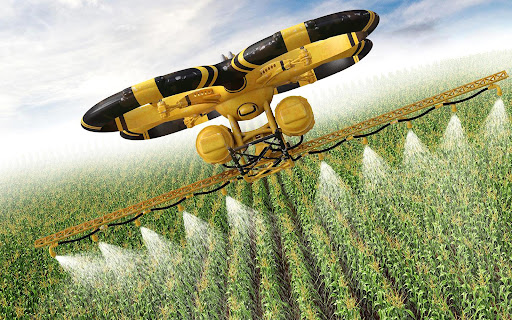
This thoughtful reflection from a young agri-tech founder not only portrays the spirit of a new generation of entrepreneurs but also depicts the broader transformation of Vietnam’s agriculture. The familiar image of the diligent buffalo in the rice field, once the symbol of a wet-rice civilization, is gradually being replaced by automated machinery, drones, and smart devices that allow farmers to control their work through smartphones. This is not simply a change in tools but a revolution in mindset: marking the inevitable transition from agriculture based on finite resources and traditional experience to one driven by knowledge, data, and precision technology.
In this great transformation, the central role no longer belongs to smallholder farmers but to private enterprises, particularly the new generation of agricultural entrepreneurs. With market sensitivity, innovative thinking, and the ability to mobilize resources flexibly, they are pioneering the transfer of technological breakthroughs from laboratories to farmlands and developing sustainable business models. They are not merely cultivating or raising livestock; they are designing solutions, optimizing value chains, and shaping entire production ecosystems. The rise of private enterprises is the clearest indication of the new vitality and potential of Vietnam’s agricultural sector.
This transformation is being driven by both challenges and opportunities of the modern era. On the side of challenges, Vietnam’s agriculture is facing its most difficult tests in history: increasingly extreme climate change is directly threatening the Mekong Delta, the nation’s rice bowl; international competition is becoming fiercer, with stricter requirements on quality and traceability; while land and water resources are deteriorating. However, within every challenge lies an opportunity. The Fourth Industrial Revolution, with its remarkable advances in artificial intelligence, the Internet of Things, and biotechnology, is providing unprecedented tools to solve long-standing problems. At the same time, new-generation Free Trade Agreements (FTAs) have opened doors for Vietnamese agricultural products to reach major global markets, but they also require compliance with the highest standards. This context creates an urgent need for modernization, which is no longer a choice but the only path to ensure national food security, enhance competitiveness, and realize the aspiration for a prosperous and sustainable agricultural sector. On that path, empowering, enabling, and unleashing the potential of the private economy is the strategic key to opening the next chapter of Vietnam’s agriculture.
In response to this practical demand, a strategic policy framework has been established to unlock national potential through the issuance of the “Resolutions Quartet”. Rather than a collection of separate policies, this framework represents a coherent legal ecosystem: positioning the private economy as a crucial driving force for growth (Resolution No. 68-NQ/TW); fostering breakthroughs in science, technology, innovation, and digital transformation (Resolution No. 57-NQ/TW); reforming law-making and implementation to meet the development requirements of the new era (Resolution No. 66-NQ/TW); and setting orientations for international integration in the current global context (Resolution No. 59-NQ/TW). For the first time, the “fertile policy soil” that agricultural entrepreneurs have long dreamed of is taking clear shape, creating a golden opportunity to realize the vision of a prosperous Vietnamese agriculture.
Barriers Holding Back Enterprises
To truly understand why the path toward empowering the private economy in high-tech agriculture remains uneven, there is no better way than to listen to those directly involved. Through an interview conducted by Vietnam Report with representatives of Enfarm AgriTech, combined with data synthesis and analysis of leading enterprises reported in the media, a comprehensive picture has emerged. The core obstacles do not merely lie in tangible factors such as capital or technology, but originate more deeply from the mindset, institutional framework, and structural characteristics of the entire agricultural ecosystem.
Market and Trust Barriers: “Convincing a farmer to trust an app is harder than convincing an investor to trust a business plan.”
This may be the most fundamental and complex barrier, identified by most industry leaders as a critical bottleneck. No matter how sophisticated a technology may be, it becomes meaningless if it cannot overcome the wall of skepticism from end users. Mr. Nguyễn Đỗ Dũng, Co-founder and CEO of Enfarm AgriTech, has frankly concluded that the greatest barrier does not lie within the technology itself but in the trust of farmers.
This lack of trust is not a matter of stubbornness, but rather the result of accumulated negative experiences over many years. Mr. Dũng explained that “For a long time, farmers have had to cope with counterfeit fertilizers, substandard agricultural materials, and unfulfilled promises of new technologies that failed to deliver tangible results. They have grown accustomed to waiting through an entire crop season, sometimes up to six months, just to verify whether a new method truly works. Such prolonged waiting and repeated exposure to risk have gradually eroded their trust.”
This skepticism is further reinforced by deeply ingrained habits of experience-based farming, passed down through generations. The transition from experience-driven agriculture to data-driven agriculture is not merely a change in tools, but a profound transformation in mindset.
Trust is not only challenged at the input stage but also by the economic realities of the output side. A common observation within the industry is that even when enterprises produce excellent products, farmers often continue to face the recurring scenario of “bumper crops, falling prices.” The barrier therefore does not stop at production but extends to the output stage, reflecting the structural disruptions within the post-harvest value chain. Technology enterprises have come to realize that they cannot simply sell a technical solution; they must become integrated partners who actively connect markets to ensure that farmers can perceive clear economic benefits.
Even among end consumers, trust remains a decisive factor. The key question always arises: “Are consumers willing to pay for those added values?” When the market does not yet fully understand or trust the value of high-tech agriculture, product demand remains unstable and unpredictable. This forces pioneering enterprises to build trust through transparency, such as applying technologies that allow consumers to directly verify product origins and production processes.
Capital and Credit Barriers: “Banks require collateral, but our greatest asset is the idea itself.”
If trust is a psychological barrier, then capital is a massive physical one. High-tech agriculture is a capital-intensive sector that demands substantial initial investment and involves a long payback period, often several times longer than traditional methods. This presents an almost insurmountable challenge for smallholder farmers and small- and medium-sized enterprises.
However, the issue lies not only in the lack of capital but also in the fundamental incompatibility between traditional credit models and the specific nature of the agricultural sector. In practice, commercial banks tend to perceive agriculture as a high-risk field, showing reluctance to provide long-term loans and typically requiring large amounts of collateral. What high-tech agriculture truly needs is “smart capital” – patient, understanding, and accompanied by advisory support and project assessments based on feasibility rather than solely on collateral value.
For startups, this barrier is even greater. Mr. Nguyễn Đỗ Dũng, Co-founder and CEO of Enfarm, pointed out a common psychological reality: “Even for fertilizers, something every farmer knows they must use, many still have to buy on credit.” In such a context, convincing farmers to pay a significant upfront cost for a new technology is extremely difficult. This forces startups to find ways to adapt, such as developing flexible service models or equipment rental options, transforming a large investment into smaller, more accessible operating cost.
Land and Scale Barriers: “My technology can manage 100 hectares, but I can’t find even 10 contiguous hectares.”
Scale is a prerequisite for the efficiency of high-tech agriculture, yet it remains one of the most difficult knots to untangle in Vietnam. Fragmented and scattered land ownership is a structural barrier that constrains development. The reality is undeniable: “We cannot deploy robots, drones, or advanced irrigation systems like those in Israel on plots of just a few hundred square meters.”
The process of land consolidation faces not only legal complications but also sensitive social issues. Concerns have been raised about the potential emergence of a new class of landowners if land accumulation is not accompanied by socio-economic models that balance interests fairly. A strategic approach currently being pursued by pioneering enterprises is the development of high-tech cooperatives, where farmers contribute land and become partners rather than being excluded from the production process. This model offers a promising and sustainable solution to the challenge of scale, ensuring that technological advancement goes hand in hand with social inclusion.
Institutional and Ecosystem Barriers: “We are like lone athletes, lacking a playing field, referees, and teammates.”
Ultimately, all the barriers discussed above converge on a broader and deeper issue: the absence of a well-coordinated support ecosystem in which the State plays an enabling and guiding role.
One of the most concrete manifestations of institutional barriers, as highlighted by Mr. Nguyễn Đỗ Dũng of Enfarm, lies in the rigidity of definitions and regulations. He posed a critical question: “For a digital product or a new technology such as a soil sensor, can it be classified as ‘agricultural machinery’ to qualify for policy support? Some provinces say yes, others say no. If we have to wait for official guidance, the technology may ‘die’ before it is ever applied.” This lack of flexibility creates an invisible administrative barrier that slows down the pace of innovation.
Another major weakness of the current ecosystem is the lack of connectivity. A common metaphor used within the industry describes the situation as “having the train but no tracks to run on,” where the “tracks” refer to the foundational research data and the linkage among research institutes, universities, and enterprises. This viewpoint has gained widespread agreement and reinforced calls for a “Five-Party Linkage” model, which includes farmers, manufacturers, the government, scientists, and banks. To make this vision a reality, a critical step is the establishment of an open national agricultural data infrastructure, which would serve as the connective foundation for high-tech agriculture to grow and be adopted on a wider scale.
In essence, voices from the field demonstrate that to truly empower the private economy in high-tech agriculture, isolated policies are not enough. What is needed is a comprehensive revolution in both mindset and action: building trust among farmers, developing intelligent financial flows, removing land-related bottlenecks, and most importantly, creating a flexible, transparent, and supportive policy ecosystem that genuinely enables innovation and sustainable growth.
Successful Models of High-Tech Agricultural Development
If the barriers faced by Vietnam’s high-tech agricultural enterprises are viewed as a complex puzzle, then the historical experiences of leading agricultural nations around the world serve as a valuable handbook filled with potential solutions. An analysis of the successful models of Israel, the Netherlands, and the United States reveals one fundamental commonality: the rise of the private sector in agriculture was not a spontaneous process, but the deliberate outcome of well-crafted state strategies.
Governments Creating Opportunities for Enterprises to Participate
The first and perhaps most profound model can be seen in how countries such as Israel and Japan identified existential national challenges and empowered the private sector to develop technological solutions.
In Israel, the national challenge was ensuring food security under conditions of desertification and severe water scarcity. The government did not merely allocate research funds in a fragmented manner. Instead, it established targeted R&D funds and support programs that set clear objectives and challenged scientists and businesses to develop technologies capable of transforming deserts into arable land. The result was the birth of groundbreaking innovations such as drip irrigation – not because a single company sought to sell a product, but because an entire nation needed a solution for survival. In doing so, the Israeli government transformed a national pressure into a driving force for private-sector innovation.
Similarly, Japan faced the dual challenges of a rapidly aging population and a shrinking base of arable land. The government clearly defined this as a national issue and launched comprehensive agendas for smart agriculture. It created dedicated funding mechanisms and incentive policies for enterprises developing agricultural robots to replace human labor, and for the construction of vertical farms to address spatial limitations. Japanese startups and technology corporations, in developing these solutions, did not merely pursue market opportunities; they also viewed their work as directly contributing to solving one of the country’s most pressing social challenges.
The Government as Ecosystem Builder
The Netherlands has built a highly successful high-tech agricultural sector by creating a well-designed innovation ecosystem. Despite its small geographical size, the country has become the world’s second-largest exporter of agricultural products, not through direct government intervention, but through the proactive role of the state in establishing a dynamic innovation ecosystem known as “Food Valley.”

The Dutch government does not dictate what Wageningen University – the world’s leading agricultural university – should research, nor does it compel enterprises to collaborate with the university. Instead, it invests heavily in foundational research, cultivates an outstanding academic environment, and ensures a transparent and enabling legal framework. This approach has turned Wageningen into a natural magnet that attracts hundreds of enterprises, from multinational corporations to technology startups, all eager to establish themselves nearby in order to access cutting-edge knowledge and talent. The role of the government is to create an environment of interaction where the key stakeholders – the State, scientists, manufacturers, and farmers – can freely connect and collaborate. What the Netherlands has successfully established is a market for innovation, where ideas are exchanged and projects emerge organically and efficiently. This is the art of empowerment through the creation of an enabling environment.
Empowering Data Utilization
The third model, particularly relevant in the digital era, is empowering the private sector to access and utilize the key resource of the knowledge economy: data. The large-scale precision agriculture system of the United States could not have emerged without a strategic decision from the government – to invest in and unlock access to public data resources.

The Global Positioning System (GPS), originally developed for military purposes, was made freely available for civilian use by the U.S. government. This decision paved the way for a revolution, enabling companies such as John Deere to develop highly precise generations of autonomous tractors and harvesters. Similarly, public datasets on meteorology, soil mapping, and satellite imagery collected by government agencies have been made widely accessible. This has created vast opportunities for a multitude of startups and technology corporations to build applications and data analytics platforms that provide intelligent farming recommendations to producers.
In this way, the state does not directly create technological products. Instead, it invests in foundational data infrastructure and grants the private sector access to exploit, innovate, and commercialize value-added services built upon it. This is an exceptionally effective model of empowerment in the 21st century, where data is considered a national resource as valuable as land or minerals.
In summary, international experience shows that to fully unleash the potential of the private sector in agriculture, the role of the state should extend beyond mere regulation. The government must act as an ecosystem architect – shaping the environment, setting strategic directions, and providing the tools that enable all stakeholders to grow together. These three successful models from around the world offer a valuable strategic framework for Vietnam to develop a truly advanced and high-tech agricultural sector.
Building a High-Tech Agricultural Sector in Vietnam
By deeply identifying the barriers constraining private enterprises and learning from successful international models, the roadmap for developing Vietnam’s high-tech agricultural sector has become clearer. Within the strategic context shaped by the “Quartet of Resolutions,” this journey requires a fundamental transformation of the State’s role – from management to facilitation. Such transformation can be realized through four strategic levers, which represent concrete actions to translate the spirit of these resolutions into practice.
Institutional Lever
The greatest challenge today does not lie in the absence of policies, but in the rigidity of existing ones, which have yet to keep pace with the rapid evolution of technology and emerging business models. As Mr. Nguyễn Đỗ Dũng of Enfarm pointed out, the problem lies not only in the regulations themselves but also in how they are interpreted. A telling example is whether a smart soil sensor can be recognized as “agricultural machinery” to qualify for policy incentives – an illustration of institutional hesitation in the face of innovation. To address this issue, the State must shift its mindset from “managing by predefined rules” to “creating space for innovation.” This is a core action in realizing the spirit of Resolution No. 57-NQ/TW on innovation.
Proposed Solutions:
- Establish a “Sandbox Mechanism”: Drawing inspiration from the Netherlands’ creation of “Food Valley” as an innovation playground, the government should establish legal sandboxes for high-tech agriculture. These sandboxes would serve as safe regulatory environments allowing enterprises and cooperatives to experiment with new business and technological models – such as land consolidation schemes, digital contract farming, or new drone applications – within a defined scope and timeframe. This mechanism would provide policymakers with real-world evidence of the effectiveness and risks of emerging models, enabling them to design adaptive regulations instead of stifling creativity at its inception.
- Reposition the Role of Research Institutes: The weak linkage between research and the market remains a structural limitation. Following the Israeli model, the State should redefine the role of public research institutes. Rather than conducting research merely based on allocated budgets, institutes should be encouraged – or even required – to operate under a demand-driven mechanism that responds directly to the practical needs of enterprises and national priorities (for example, developing salt-tolerant rice varieties adapted to climate change in the Mekong Delta). This would transform research institutes into genuine partners of the private sector and ensure that research outcomes are effectively commercialized.
Financial Lever
In practice, enterprises – particularly startups – are in urgent need of an intelligent financial system that understands the unique characteristics of the agricultural sector. The key barrier lies in the lack of financial instruments suited to an industry defined by long investment cycles and high levels of risk.
Proposed Solutions:
- Establish an Agricultural Venture Capital Fund: The government should initiate a dedicated venture capital fund for high-tech agriculture, operating under a public–private partnership model. Unlike commercial banks, this fund would invest directly in promising startups, accepting higher risks in exchange for potential breakthroughs. The participation of the State would serve as a strong signal of confidence, attracting both domestic and international private investors to co-invest, thereby creating a genuine flow of capital for innovation.
- Develop Specialized Credit Packages: The State Bank of Vietnam should direct and encourage commercial banks to design credit programs specifically for high-tech agriculture. The credit assessment mechanism must undergo a fundamental shift, moving away from collateral-based evaluations toward assessments based on project feasibility, future cash flows, and technological potential.
Data and Digital Infrastructure Lever
This represents a strategic step in the direct implementation of Resolution No. 57-NQ/TW on digital transformation. The successful model of the United States demonstrates that government investment in and the opening of public data resources is the most effective way to empower the private sector in the digital era. The State must play the central role in building the foundational data infrastructure.
Proposed Solutions:
- Develop an Open National Agricultural Data Portal: The government should invest in the creation and open access of fundamental datasets. Providing this data resource will empower a wide range of startups and technology companies to develop AI-driven applications, predictive models, and value-added services without incurring the high costs of data collection from scratch.
- Prioritize Digital Infrastructure Investment for Rural Areas: An Internet of Things (IoT) solution cannot function without connectivity. The government should adopt a strategic approach that prioritizes investment in mobile and broadband Internet coverage in key agricultural regions. Ensuring that digital infrastructure is developed ahead of demand will lay the groundwork for Vietnam’s agricultural digital revolution.
Market Lever
The greatest barrier remains the “trust of farmers.” The government plays an irreplaceable role in rebuilding this trust and in creating an orderly market where quality is recognized and rewarded.
Proposed Solutions:
- Support and Scale Up Demonstration Farms: “Vietnamese farmers are highly adaptive – once they clearly see economic benefits, they adopt innovations immediately.” Through the agricultural extension system and targeted national programs, the government should act as a sponsor to support enterprises and cooperatives in developing large-scale, high-tech demonstration farms that are successful, transparent, and accessible for visits and learning. These practical models serve as far more convincing tools than any advertisement, helping to break the cycle of hesitation and the long waiting period that farmers often face in testing new technologies over an entire crop season.
- Create a Level Playing Field through National Standards: The current situation, where genuine and substandard products coexist without distinction, discourages honest enterprises. The government must assert its role as a fair regulator by developing, promulgating, and strictly enforcing clear and transparent National Technical Standards (QCVN) for clean, organic, and high-tech agricultural products. A fair market, where genuine quality is legally protected, will be the strongest incentive for enterprises to invest in responsible and sustainable practices.
By implementing these four strategic levers in a synchronized manner, Vietnam can transform from an environment filled with barriers into a truly enabling ecosystem – one in which private enterprises are freed from unnecessary burdens and have the space to innovate, compete, and lead the nation’s agriculture toward the future.
From a Farming Mindset to Building a Complete Agricultural Ecosystem
Throughout this analytical journey – from decoding successful international models to listening to the deep reflections of Vietnam’s leading high-tech agricultural entrepreneurs – a consistent conclusion has emerged: empowering the private economy is not a choice but the inevitable path for Vietnam’s agriculture to truly take off.
The future of Vietnam’s agriculture is not merely about achieving export revenues of 50 or 60 billion USD, but about building a branded, knowledge-based agricultural sector and a complete ecosystem where every product carries a “green passport” verified by technology; where farmers become agricultural experts on their own land; and where agri-entrepreneurs not only create wealth for themselves but also contribute to addressing global challenges such as climate change and food security.
By committing to decisive action along the roadmap of ecosystem creation, the State will establish an enabling environment that allows the great aspirations of Vietnamese entrepreneurs to be realized. When that happens, Vietnam’s agriculture will not only stand as a solid economic pillar of the nation but will also emerge as a smart, sustainable agricultural power, capable of conquering the most demanding markets on the global.