Artificial Intelligence (AI) is rapidly emerging as one of the most powerful forces shaping the future of the world. Its accelerated development is influencing not only the economy and technology, but also politics, security, society, and the fundamental values of humanity. In this context, the central question is no longer whether AI will continue to advance, but how it will be governed to serve humanity, peace, and sustainable development.
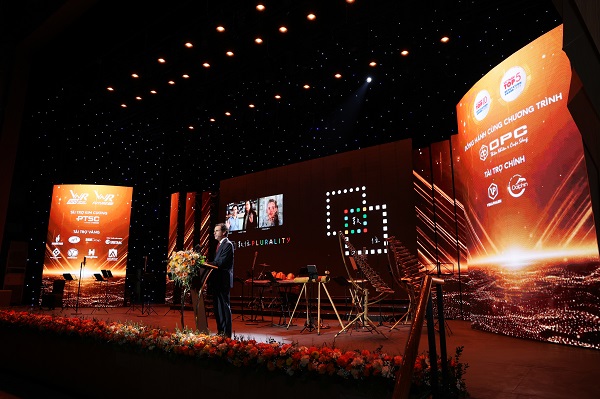
At the High-Level Roundtable Conference on Artificial Intelligence Strategy held on October 28, 2025 in London (UK), participants emphasized that Artificial Intelligence (AI) should be understood as a constitutive element of a new world order. AI has the potential to drive economic growth, enhance governance efficiency, and improve quality of life; however, it also presents unprecedented challenges related to ethics, human rights, data security, and social stability. In the absence of appropriate principles and governance mechanisms, AI may exacerbate inequality, generate systemic risks, and erode public trust.
A central argument of the Conference was that AI cannot exist outside a framework of global governance. While technological development is advancing at a pace far exceeding that of traditional institutions, gaps in rules and norms risk enabling the misuse or misdirection of AI. Therefore, the establishment of shared principles for AI governance—grounded in universal values such as responsibility, transparency, respect for human dignity, and peace—was identified as an urgent priority.
Participants also underscored the critical role of international cooperation in shaping the future of AI. As a fundamentally cross-border technology, AI presents challenges that no single country can address alone. Multilateral dialogue platforms, international alliances, and global coordination mechanisms were viewed as essential foundations for sharing experience, aligning interests, and mitigating risks arising from uneven AI development.
Within this discussion framework, Vietnam was referenced as a developing country and an active member of the international community, with a responsibility to participate in both the formulation and adherence to shared AI norms. The development and application of AI, it was emphasized, must be closely linked to the objectives of social stability, improved living standards, and the safeguarding of long-term national interests. AI was thus viewed not merely as a tool for growth, but also as a means to promote effective governance and sustainable development.
Another important theme addressed was the relationship between AI, peace, and global security. While AI opens new possibilities for forecasting, risk management, and decision support, its deployment in sensitive domains also carries the risk of escalating tensions and conflicts if left unchecked. Accordingly, the Conference highlighted the need to establish international oversight mechanisms and cooperative frameworks to ensure that AI is used in the service of peace and stability.
In addition, the development of AI must be anchored in ethics and social responsibility. Human beings must remain at the center of all AI-related decisions. AI systems should be transparent, accountable, and designed to support—rather than replace or undermine—the core values of society.
Representing the Boston Global Forum (United States)—partner of Boston Report Group, Mr. Nguyen Anh Tuan, Co-Founder and Chief Executive Officer, introduced three integrated strategic programs to support the future of AI in Vietnam, including:
AIWS Government 24/7 – a human-centered governance model ensuring continuity, ethics, and transparency in the AI era;
A trustworthy digital asset and innovation economy, grounded in ethical standards, real value, and public trust;
A cultural and creative pillar, ensuring that technological advancement progresses alongside the human spirit, culture, faith, and moral values.
Together, these three pillars form a comprehensive vision in which AI is not an instrument of control, but a companion to human dignity, creativity, and peace.
At present, AI is creating an urgent demand for a new global governance framework based on cooperation, responsibility, and shared values of humanity. Shaping the future of AI is not merely a technological challenge, but a governance, ethical, and peace-related imperative within a rapidly transforming world order.
The Conference was attended by senior Vietnamese leaders, global strategists, scholars, and experts from organizations such as the Boston Global Forum, the Wahba Initiative (NYU), AWS, Microsoft Research, OpenMined, DeepMind, Quantum Leap, the FinTech Alliance, as well as representatives from the White House and the UK Technology Strategy Board, among others.
Full Conference Report:
https://bostonglobalforum.org/books/BGF-To-Lam_London.pdf