In a global economy marked by fragmentation, re-globalization, and the rapid advancement of digital technologies, brand-building is no longer solely the responsibility of the marketing department. Instead, the brand has become a core competency of corporate governance – where long-term vision, organizational culture, data responsibility, and market adaptability come together to create sustainable competitive strength.
Insights shared by Professor John Quelch – former Vice Dean of Harvard Business School and Vice Chancellor of Duke Kunshan University, one of the world’s leading experts in brand management – combined with the practical perspective of Đinh Hữu Thạnh, Chairman and CEO of Bee Logistics Corporation, offer a comprehensive view of brand strategy for businesses entering the 2025-2030 period.
Global Brands Must Begin with Local Understanding

According to Professor Quelch, every major global brand is, at the same time, a strong local brand. He points to McDonald’s – where menus are tailored to local tastes, ingredients and staffing reflect local characteristics, and even investors embody local identities.
“To be a strong global brand, you must be a strong and sensitive local brand,” Professor Quelch emphasized.
For Asian businesses, the question is not only “How do we standardize?” but “How far should we standardize – and how deeply should we localize?” This decision depends on various factors: the brand’s maturity, market size, geopolitical risk, and cultural sensitivity. Above all, it requires patience and long-term commitment from leadership, as no global brand is built overnight.
A common lesson from successful companies is their investment in recruiting and nurturing local talent – individuals who understand the market and can translate brand values into the local cultural context.
In reality, many Asian enterprises excel at the upstream end of the value chain but have yet to fully capitalize on the emotional value that strong brands deliver. To climb to a higher rung on the global value chain, businesses must build meaningful differentiation – better, faster, or more affordable products and services – supported by a capable team.
Often, the bottleneck in scaling internationally is not ambition, but a shortage of customer-focused marketing talent.
Open Data and the Irreplaceable Role of Humans in Brand Management
One of the most discussed topics today is the powerful rise of science and technology. Tools such as AI, Big Data, and First-Party Data are proving highly effective in helping businesses analyze consumer behavior and optimize marketing strategies.
However, the brand’s voice – and human empathy – remain irreplaceable. Overreliance on data risks overlooking subtle cultural and emotional nuances essential to strategic communication. Even the world’s leading corporations continue to meet customers in person – visiting stores, offering greetings on special occasions, or speaking directly with employees.
Issuing a warning against “data delusion,” Professor Quelch noted:
“No amount of data can replace talking directly to consumers every month.”
He stressed that leaders in the era of globalization and open data must strike a balance between technological application and cultural transmission. Cultural fluency is essential, as it reflects understanding of what motivates customers to spend across markets.
However, not every industry allows time for deep localization. In food and beverage, companies can adapt extensively to local tastes. In high-tech sectors – where the pace of innovation determines success – globally standardized products and services may take precedence.
As data becomes a strategic asset, data privacy is emerging as a critical principle in all business activities. Companies must protect customer information through responsible collection and secure storage. Even when customers consent – something younger generations tend to do more readily – failure to safeguard their data remains a significant brand failure. Trust can collapse instantly if data is misused.
Vietnam’s Perspective: Global Ambition and the Challenge of Differentiation
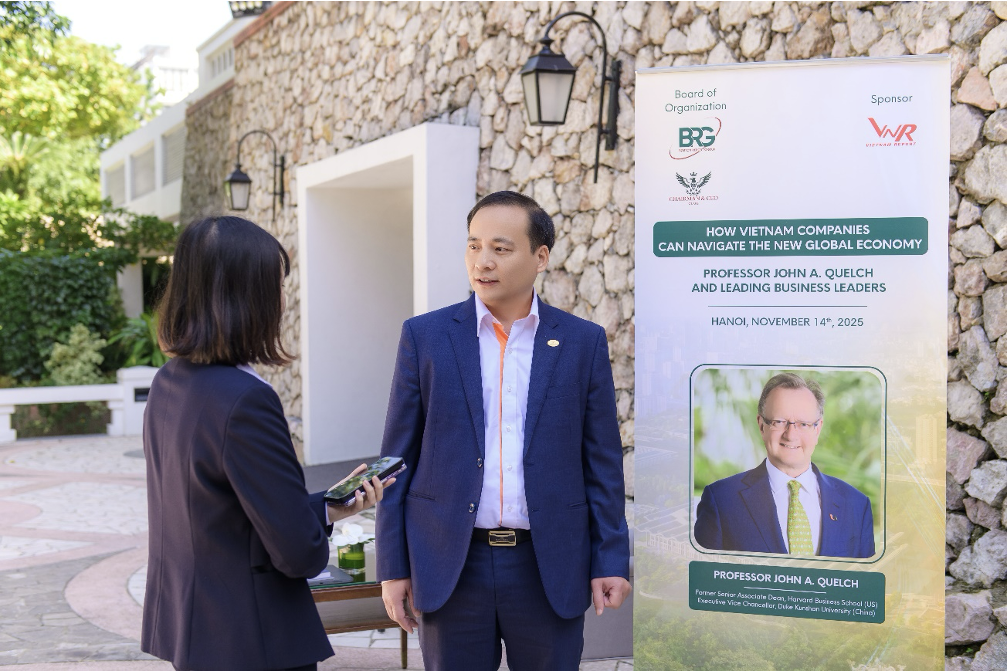
Amid global shifts, Vietnamese businesses are also stepping into the international arena. Bee Logistics Corporation – one of Vietnam’s logistics pioneers with overseas representative offices – is a notable example.
Chairman and CEO Đinh Hữu Thạnh highlights that, Vietnamese enterprises still benefit from a stable policy environment, rising public investment, and expanding production and export capacity. However, as they enter global markets, they face challenges that require perseverance, deep market knowledge, and strong networks – attributes that take time to build.
According to Mr. Thạnh, to achieve meaningful differentiation, businesses must focus on developing their human resources, nurturing a culture of teamwork and commitment, and applying technology in ways that fit Vietnam’s operational realities – optimizing processes while streamlining costs. At the same time, companies must identify distinctive strengths within their product and service chains, as well as in customer care, to meet the needs of each specific market.
“People are the most important factor. Success only comes when you have local teams who understand the market, have strong professional capabilities, and are deeply aligned with the company culture,” he affirmed.
Bee Logistics aims to become a US$1-billion Vietnamese logistics enterprise, with at least 35% of revenue from international markets – a clear indication of its brand strategy tied to global expansion.
Brand-Building in the New Era: Strategy, Culture, and Commitment
Today, globalization is no longer a playing field reserved for multinational giants. It is an open opportunity for any business capable of creating differentiated value and investing consistently. Technology and data can only reach peak effectiveness when businesses maintain human empathy and uphold responsibility toward customers. Ultimately, people form the essential foundation on which Vietnamese companies build sustainable brands and earn global trust.
In this new era, brand-building is not merely about crafting an image. It is a long-term strategy, a cultural identity, and a company’s commitment to customers around the world.


.JPG)