The private alternatives market is increasingly important to India’s economic growth. A survey of McKinsey finds limited partners are bullish on the country, yet more can be done to grow investor momentum.
Introduction
In recent years, India has emerged as one of the most closely watched destinations for global private capital. As institutional investors reassess their geographic allocations amid changing macroeconomic conditions and shifting growth expectations, India is increasingly viewed as a strategic market within the Asia–Pacific investment landscape.
Insights from global limited partners (LPs) suggest that India is gaining prominence in long-term capital allocation strategies. Compared with many emerging markets, the country combines strong economic growth potential with a rapidly expanding entrepreneurial ecosystem and a widening set of investment opportunities.
Expansion of the private markets ecosystem
Over the past two decades, India’s private markets have expanded significantly in both scale and sophistication. Private equity and venture capital investment activity has grown dramatically, transforming private capital into an important driver of business expansion and innovation.
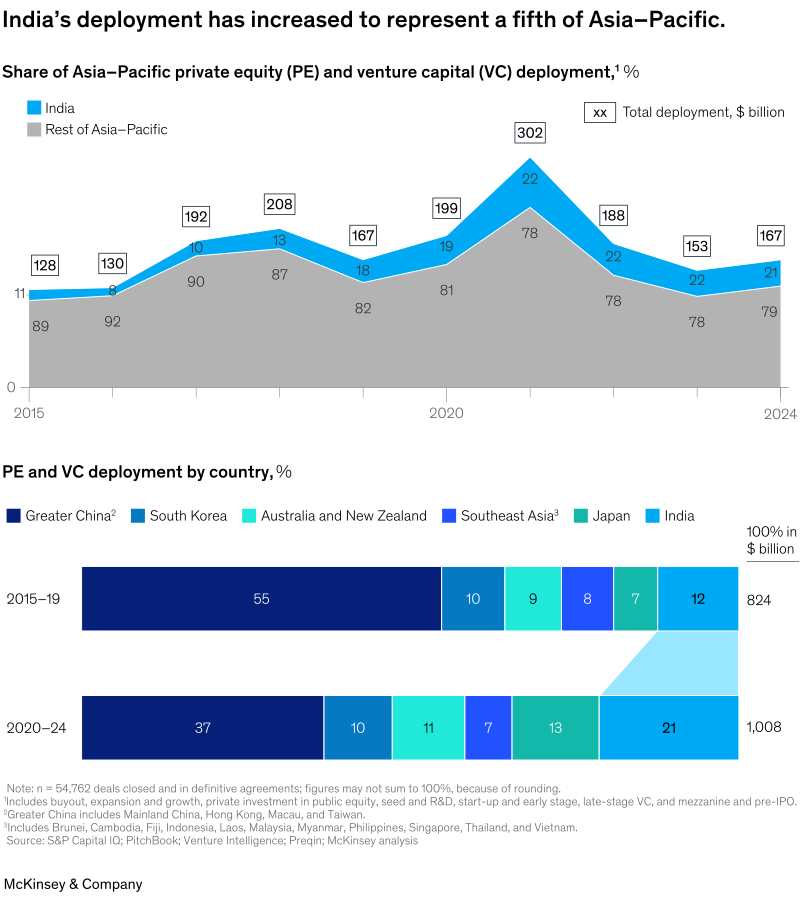
Although investment activity peaked during the global liquidity boom of the early 2020s, India has continued to strengthen its relative position within Asia’s investment landscape. Between 2020 and 2024, India accounted for approximately 21 percent of total private equity and venture capital deployment in the Asia–Pacific region, up from around 12 percent during the 2015–2019 period.
This shift reflects a broader rebalancing of capital flows across Asia. While some traditional investment hubs have experienced volatility or declining shares of regional capital, India has gradually attracted a larger proportion of private market investments.
At the same time, the long-term economic outlook reinforces investor confidence. India’s share of global GDP is projected to increase substantially in the coming decades, strengthening its role as a major growth engine in the global economy.
Global investor perspectives
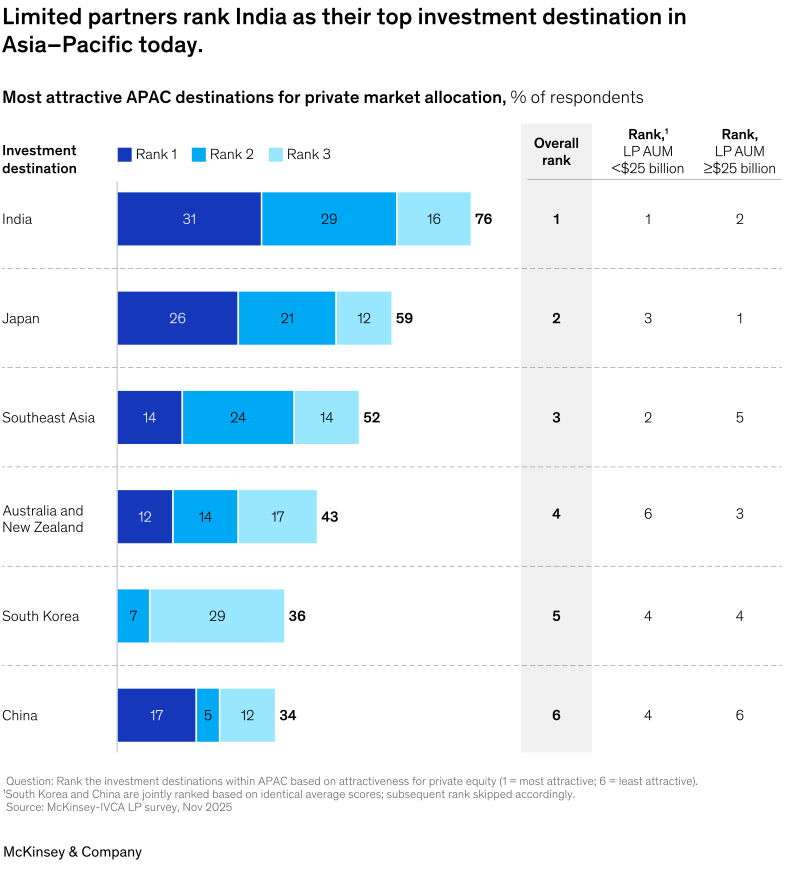
Survey evidence from global institutional investors further highlights India’s rising importance. In a survey conducted with more than 50 LPs worldwide, India was ranked as the most attractive private market destination in the Asia–Pacific region, with 31 percent of respondents placing it first and 76 percent ranking it within their top three markets.
Investor exposure to India varies by region. European LPs currently report the highest allocation to the country, while investors from North America, the Middle East, and Asia–Pacific maintain meaningful—but more moderate—exposure levels.
These patterns suggest that India is increasingly seen as a core component of regional investment strategies rather than a peripheral or opportunistic allocation.
Structural drivers of India’s investment appeal
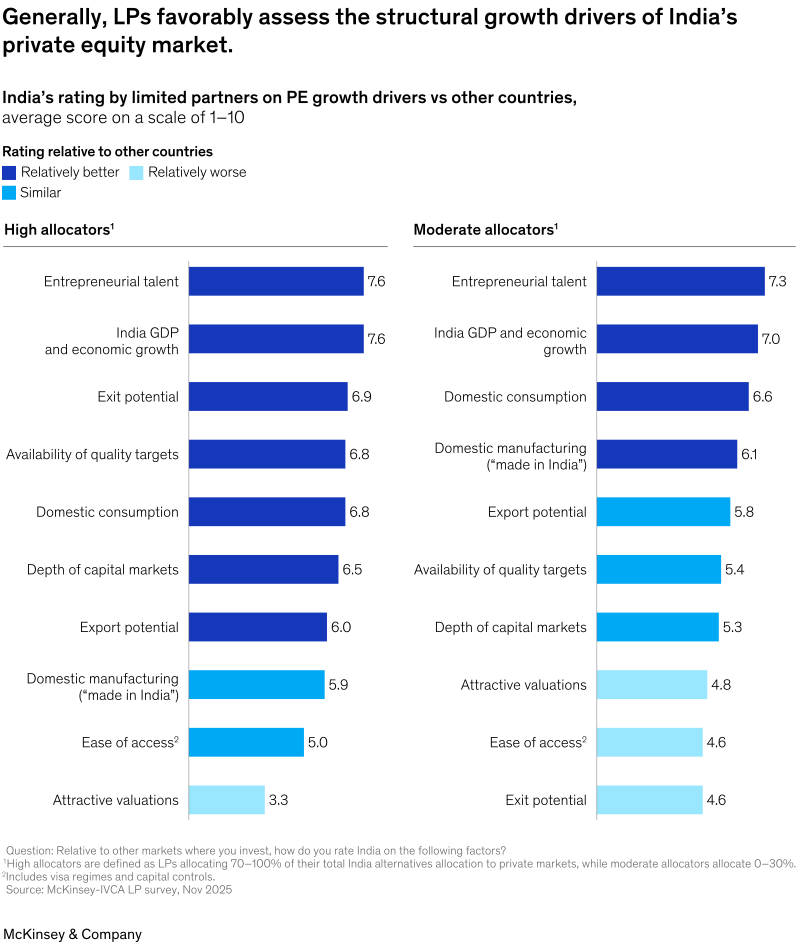
Several structural factors underpin the growing attractiveness of India’s private markets.
First, strong macroeconomic fundamentals. India remains one of the fastest-growing major economies globally, supported by favorable demographics, expanding domestic consumption, and ongoing economic reforms.
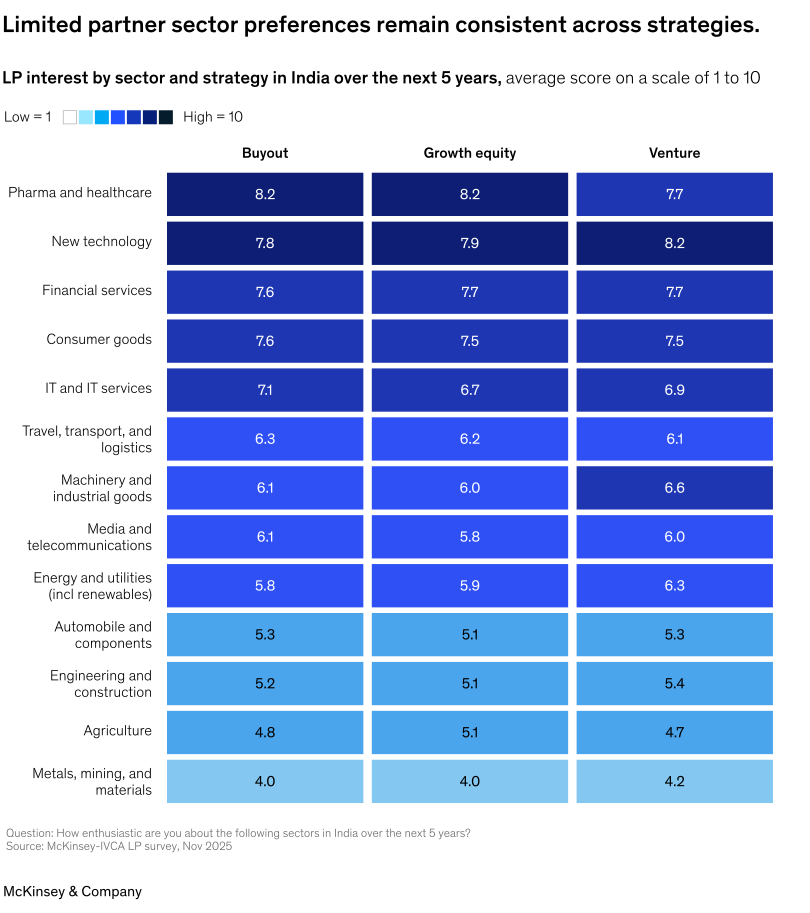
Second, sectoral diversity. Investment opportunities span a wide range of industries, including technology, financial services, healthcare, manufacturing, and consumer sectors. This breadth enables investors to pursue diversified strategies across both growth-stage and mature companies.
Third, the maturation of the entrepreneurial ecosystem. India has seen the rapid emergence of startups, scale-ups, and mid-market companies seeking growth capital. This expanding pipeline has created a robust environment for venture capital, growth equity, and buyout strategies.
Together, these factors have contributed to a perception among investors that India offers a unique combination of scale, growth, and market depth within the Asia–Pacific region.
Market challenges and evolving dynamics
Despite its strong growth trajectory, India’s private markets still face structural challenges. Exit opportunities, particularly through public markets, can be inconsistent, and regulatory complexity remains a consideration for international investors.
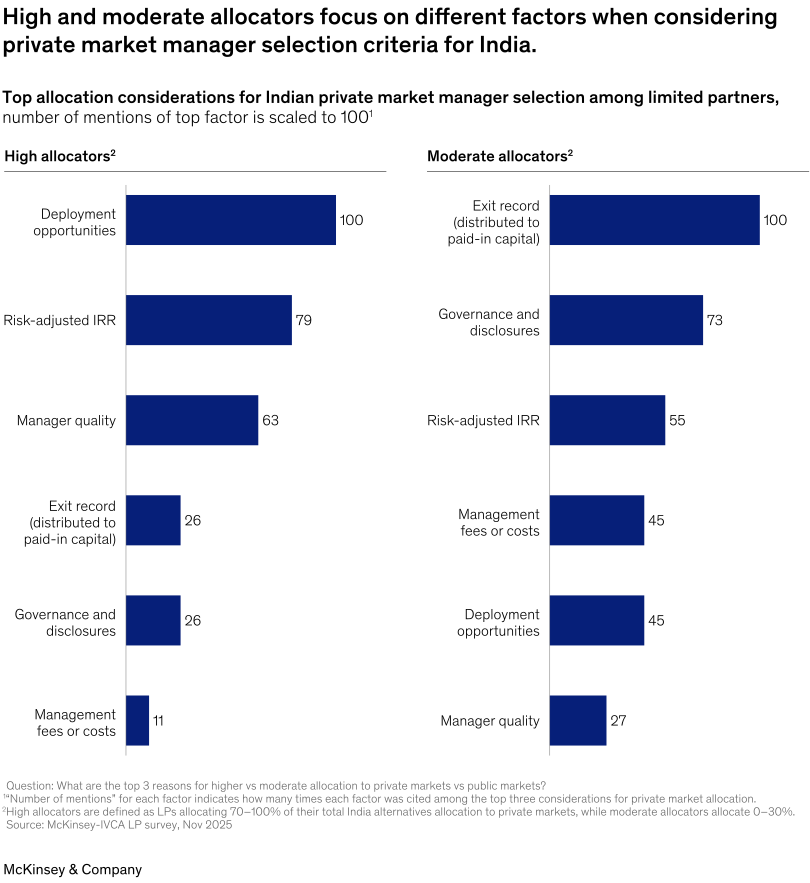
In addition, competition for high-quality assets has intensified as global funds increase their presence in the market. As the industry matures, investors are placing greater emphasis on experienced local partners, sector expertise, and disciplined investment strategies.
Nevertheless, most LPs remain optimistic about India’s long-term outlook. Continued economic expansion, improvements in capital market infrastructure, and increasing institutional participation are expected to support further development of the private markets ecosystem.
Implications for Asia’s corporate landscape
The growing prominence of India’s private markets also reflects a broader transformation in Asia’s corporate landscape. As capital flows increasingly favor dynamic and rapidly expanding markets, new corporate leaders are emerging across the region.
This shift is particularly relevant in the context of regional benchmarking initiatives such as the Asia Reputation 50: Top 50 Largest and Most Influence Companies, an Boston Report Group's upcoming ranking that aims to identify the largest and most influential companies across Asia based on reputation, scale, and regional impact.
Given India’s expanding economic influence and growing pool of high-growth companies, the country is expected to feature prominently in such regional assessments. The rise of India’s private capital ecosystem has played a critical role in nurturing globally competitive firms, enabling them to scale more rapidly and strengthen their presence across Asian markets.
As Asia’s economic center of gravity continues to evolve, initiatives like the Asia Reputation 50 provide a framework for understanding how corporate influence is distributed across the region—and how emerging markets such as India are reshaping the competitive landscape.
Source: McKinsey & Company; compiled and adapted by Boston Report Group.